


The Woodfin community, like many other Buncombe County communities is named for a man who enslaved human beings. If you’ve followed along in this series, you’ve probably recognized that to be a common theme among communities; they’re named for people of extravagant wealth. Wealth earned on the backs of enslaved black people. Indeed, our county

I remember “worst” Asheville. It’s the neighborhood where my Grandfather was born in a house with dirt floors, where I went to preschool (back when Crossroads Assembly was “West Asheville Assembly” located on Haywood Rd.), attended my first dance lessons (in the building where Asheville Greenworks is today), and went along with my mother to

Henry Robinson wrote in 1992 about his childhood community of Southside–a mournful eulogy really, to a place that no longer exists–that the sprawling community “stretched over 400 acres from Biltmore Avenue westward to the French Broad River.” Robinson informs us today that it was “the largest residential area for African-Americans in Asheville and a melting


In our last post in this series on early black public schools, we looked at the lives and careers of Harrison B. Brown and Daniel Cato Suggs, two of the original five teachers who opened Beaumont School on January 9, 1888. This new post profiles two more of these teachers, Edward H. Lipscombe and Mary
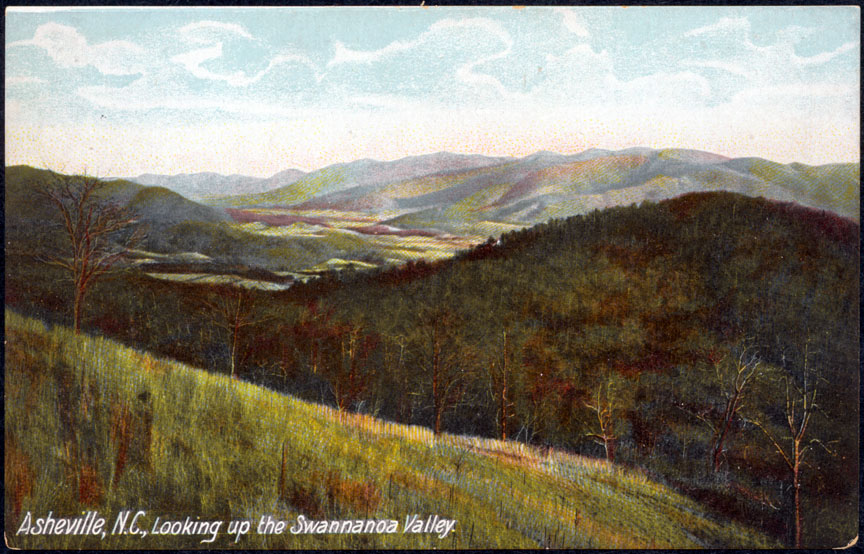
I volunteered this week to create the post for Swannanoa in part because it has been my home for the majority of my life. I was educated in grades 1-12 in “the Valley” (as you will hear natives often call the community including Black Mountain and Ridgecrest). In the 20th century, Swannanoa was transformed by

Asheville’s real estate boom in the 1920’s fostered the growth of many neighborhoods: Lakeview Park, Malvern Hills, Horney Heights, and Kenilworth, just to name a few. Biltmore Avenue borders Kenilworth on the east and across the avenue, on a knoll overlooking Biltmore Village, is the pocket neighborhood of St. Dunstan’s Circle. A Mr. Roebling first

The Creation of a Public School System for the City of Asheville, 1887-1888 Setting Up the System and Hiring the Teachers Asheville Times, July 29, 1887: “Graded School Carried: Asheville Keeps to the Front By a Very Close Squeeze” “We need not multiply words to express pleasure at the result of the election yesterday on

When I went searching our database for sources to write this edition of 52 Weeks, 52 Communities I had one thought when the results came back: “This cannot be it.” Alas, this seems to be the only historical image of the Shiloh Community in the North Carolina Collection here at Pack Memorial Library. This photo,