


Mention Paradise Chinese Restaurant, The Hot Shot, or The Silver Dollar and folks of a certain age (including yours truly) can wax eloquent on southern-fried chicken at the Paradise or after-the-bars-closed biscuits and gravy breakfasts at the Hot Shot. I think I might have enjoyed the menu in the paneled interior of Jimmie’s Waffle Shop

Standing on one corner of Asheville is an excellent place to learn about the ever-changing face of our town. Do you recognize this corner and are you familiar with its curious history? James McConnell Smith was born in 1787. According to historical accounts he was the first white child born west of the Blue Ridge.

The North Carolina Room received a call from someone–with both musical and local history interests–asking if there really was a collapse of the Swannanoa Tunnel, as the song, “Swannanoa Tunnel” relates? I said I would send him an article about it, thinking in a free moment I would just slap the article on the scanner and have it off to him.

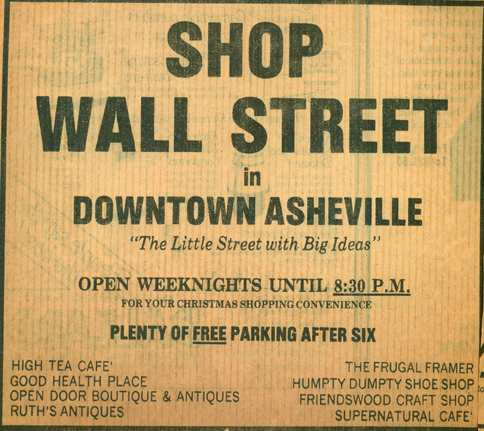
The Little Street with Big Ideas
Wall Street is without a doubt the most charming street in downtown Asheville. And to my mind it always has been. Intimate, almost European in scale, a pleasure to stroll on, and free from the din of downtown traffic. In the mid-1970s and through the 80s Wall Street was a lively precursor of what a downtown without chain stores might look like. A
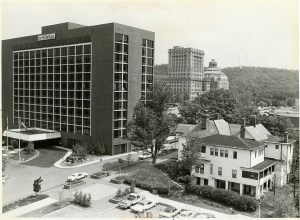
Asheville in the 1980s is the theme for a series of summer-long evening programs beginning in April. Each program covers a unique aspect of Asheville’s history from arts to business to architecture, and includes the “Save Asheville’s Downtown” grassroots campaign. The 1980s were a time of uncertainty for many. A May 25, 1980 article in the Asheville

By Joe Newman “Absolutely the Prettiest Sub-Division Yet Offered in or About the City of Asheville.” The newspaper ads made it sound like a great deal—something you couldn’t afford to pass up. The developers of Fenner Heights, a subdivision on the “gentle southeastern slope of Lookout Mountain,” boasted that “homeowners and investors have never had such
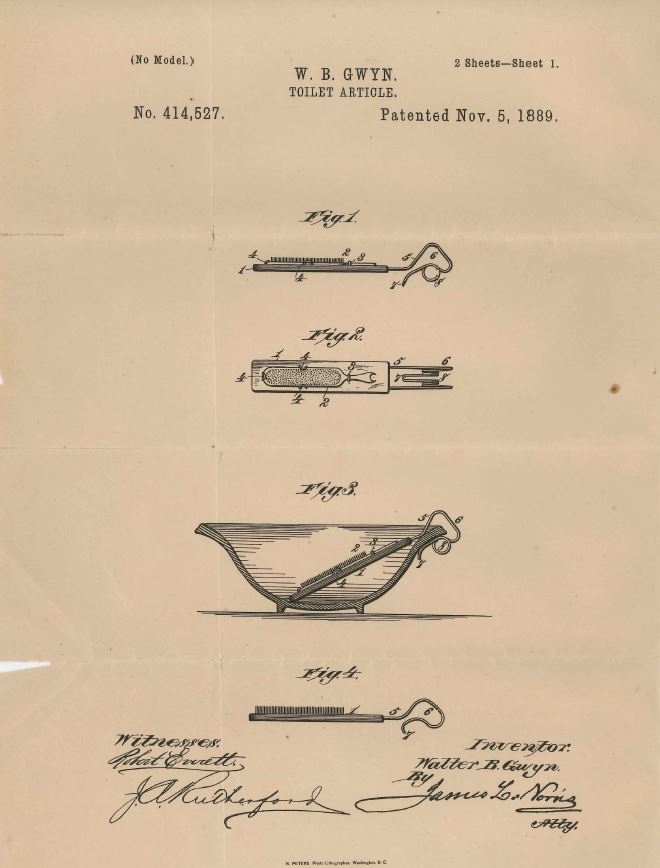
Walter B. Gwyn was an Asheville attorney, real estate man and… inventor? United States Patent No. 414,527, dated November 5,1889 appears to be… …drum roll please… a brush with a hook on it!!! Sometimes the simplest ideas are the best I suppose. He had some big local names willing to sign on as supporters of
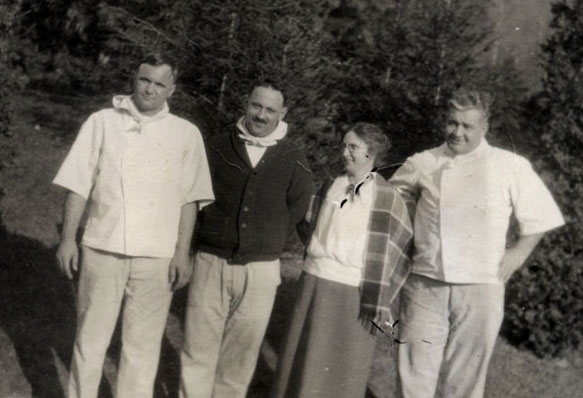
The Buncombe County Community (Night) School’s literacy program was a forerunner in the state to help teach literacy to adults. We wrote about it in a post two years ago, which covered rural Buncombe County citizens being taught to read and write. A not-as-well-known part of the Community School’s program was the Americanization Classes that were held to