


As the North Carolina Room looks at what things were happening in Asheville through local business, citizen and government involvement in the 1980s, friends and family have been working to celebrate the life and work of Asheville philanthropist, benefactor and liberal community activist Julian Price. Julian moved to Asheville in 1989 because of its architecture and a feeling. “The
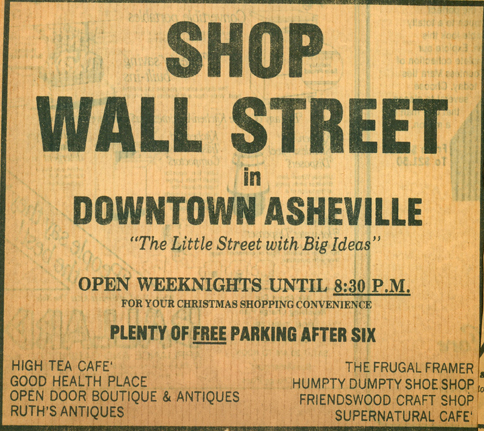
The Little Street with Big Ideas
Wall Street is without a doubt the most charming street in downtown Asheville. And to my mind it always has been. Intimate, almost European in scale, a pleasure to stroll on, and free from the din of downtown traffic. In the mid-1970s and through the 80s Wall Street was a lively precursor of what a downtown without chain stores might look like. A
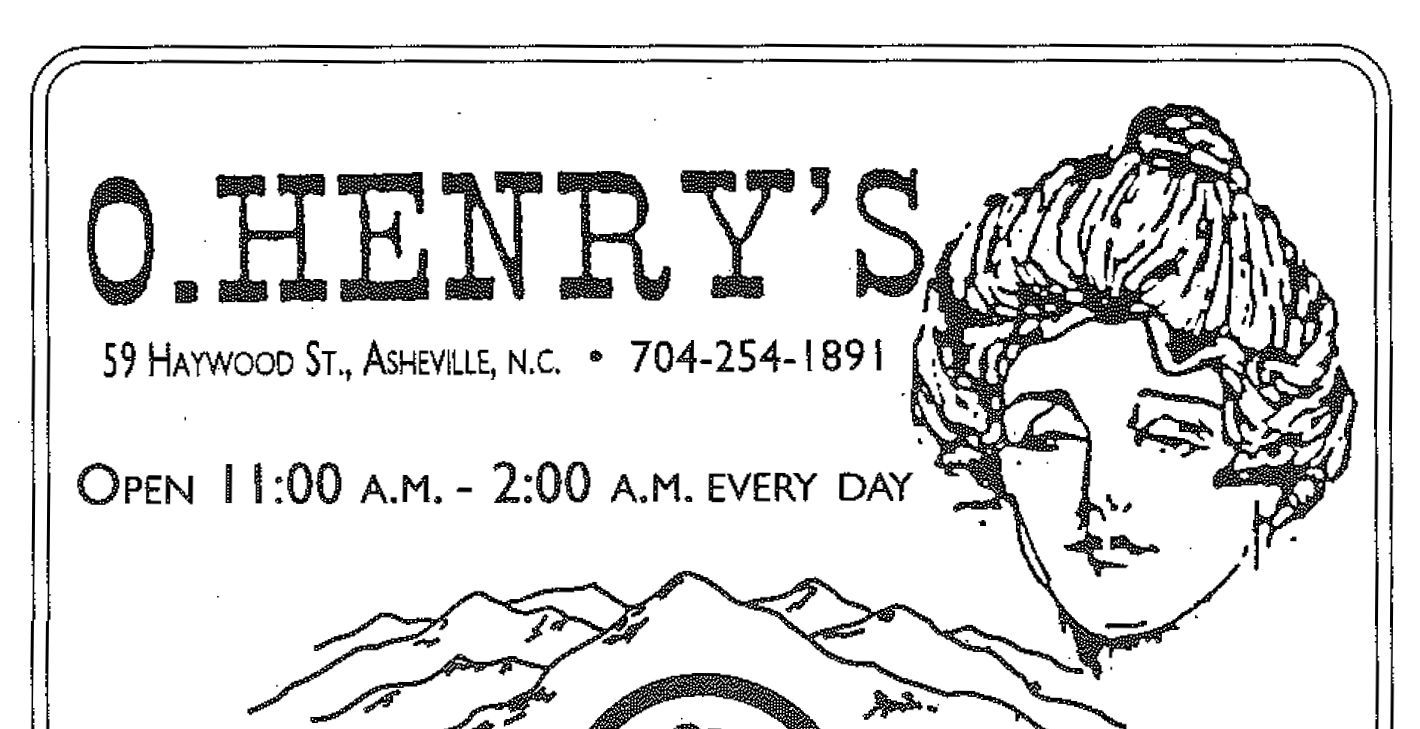
Early Businesses Paved the Way Interesting things were going on in downtown Asheville in the late ’70s and throughout the ’80s. Lower rents and sagging property values lured entrepreneurial/creative small businesses and restaurants to join long-standing small businesses to make downtown the vibrant and viable place we now see around us. O.Henry’s Restaurant opened at
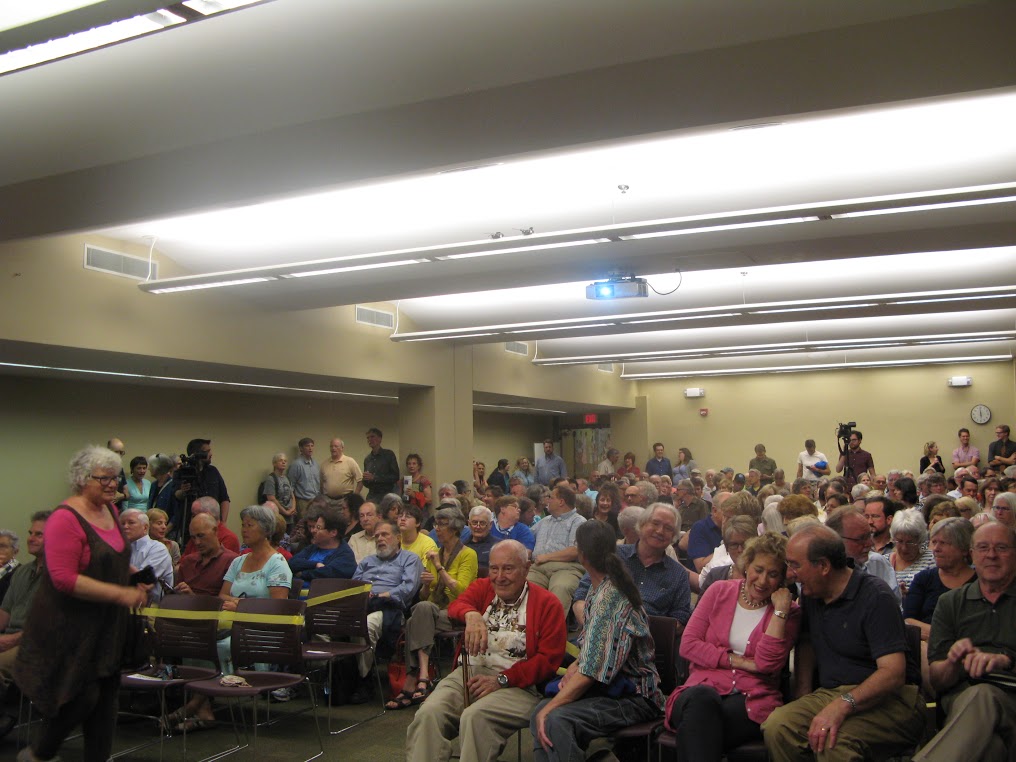
The North Carolina Room, Pack Memorial Library kicked off with a full house the first of a six part series, “Asheville in the 1980s: A Formative Decade Told by Those Who Shaped It” on Wednesday evening April 27. The series is sponsored by the Friends of the North Carolina Room. There was a current of

The North Carolina Room, Pack Memorial Library presents a six part series Asheville in the 1980s: A Formative Decade Told by Those Who Shaped It The first program of the series kicks off Wednesday April 27, 2016 from 6:00 to 7:30 in the Lord Auditorium, lower level. All events are free and open to the public.

February 1980: The Demoliton of an Entire City Block

When did Asheville’s renaissance begin?” We are often asked that question in the North Carolina Room. It is also the topic of a lot of published articles. Most responses turn straight to the 1990s. But native Ashevillians and those who lived here in the 1970s and 1980s usually see it differently. In just a few weeks, Pack Memorial Library’s
Asheville in the 1980s is the theme for a series of summer-long evening programs beginning in April. Each program covers a unique aspect of Asheville’s history from arts to business to architecture, and includes the “Save Asheville’s Downtown” grassroots campaign. The 1980s were a time of uncertainty for many. A May 25, 1980 article in the Asheville

This year the North Carolina Room is featuring a series of programs on the 1980’s – a time that helped define what Asheville was to become. But, 100 years prior to that, Asheville was in the midst of an earlier Renaissance. The train had arrived in 1880 and Asheville became a true destination and was